Fishing · Lake Costesti-Stanca
What fish you can catch in Lake Costesti-Stanca
There are 26 species in the lake, but only nine are worth a rod. The shore is a hundred metres from the guesthouse, and the spring closed season lasts two months. Below is everything you need to know before you come.
In short
- The lake holds 26 species and subspecies of fish. Nine have economic value: carp, bream, zander, catfish, asp, vimba, silver carp, bighead carp and grass carp.
- The closed season on the Prut and on the lake runs from 9 April to 7 June. On the Ciuhur river, from 1 April to 30 June.
- You need a permit from the Environment Agency. Fishing is allowed only from sunrise to sunset, with at most two rods, and you may keep a maximum of 5 kg a day.
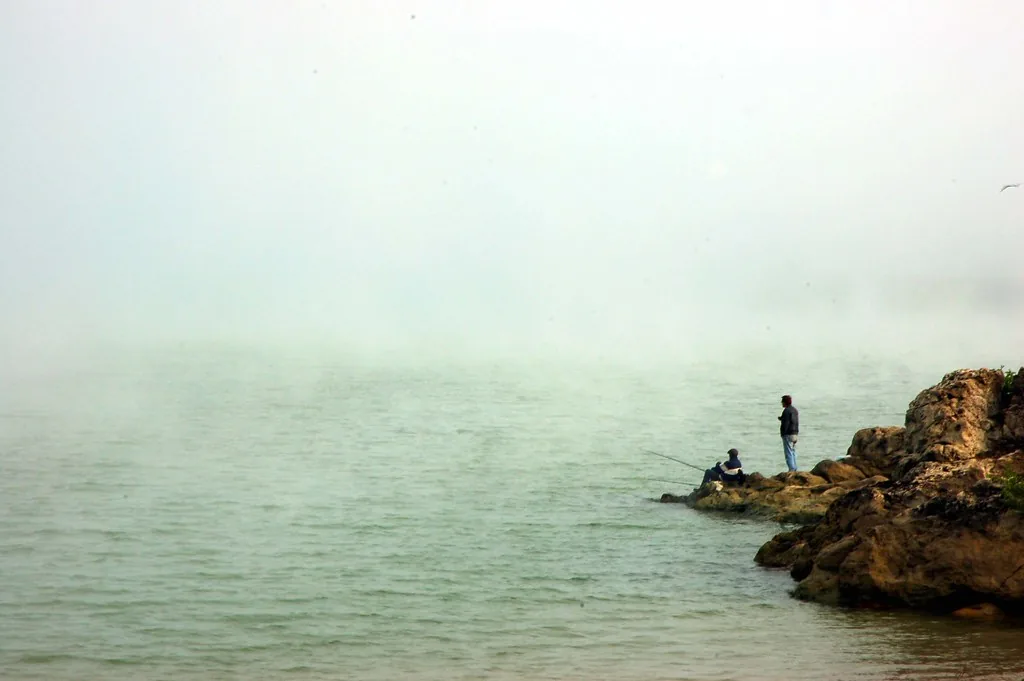
If you are staying at Duruitoarea Veche, you have nowhere to travel to reach the lake. It is a hundred metres from the guesthouse gate to the shore. Many guests do not know that this water, which from a distance looks like a large quiet pond, is the biggest reservoir in the Republic of Moldova.
We have gathered here what you need to know before coming with a rod: what you can catch, when you are allowed, what papers you need and where it is best to stand.
How big the lake is
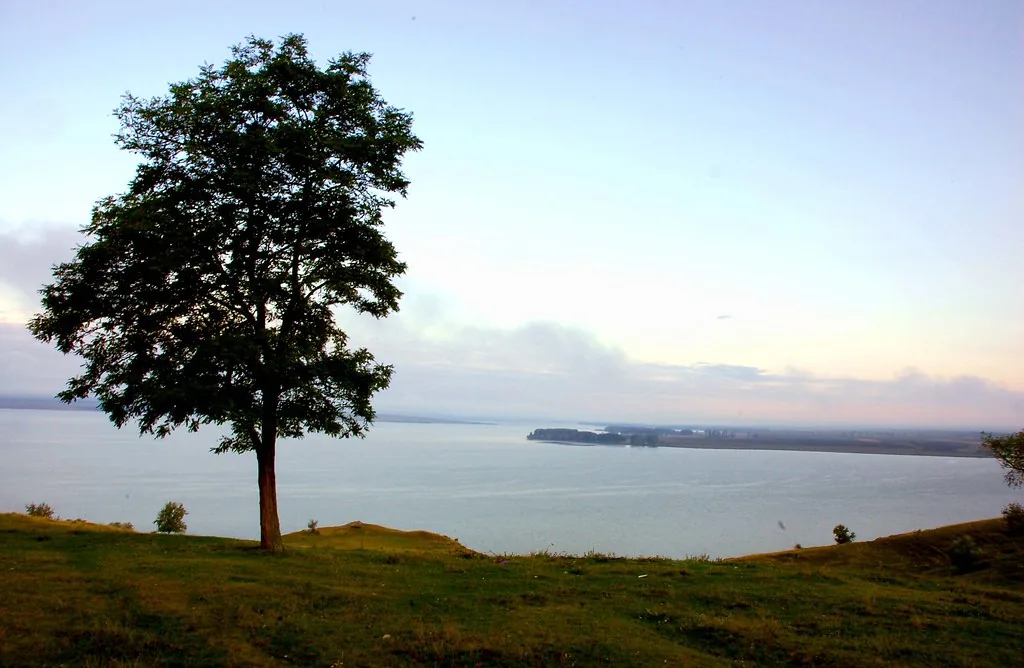
The Costesti-Stanca reservoir was formed in 1976, on the middle course of the Prut, with the building of the Stanca-Costesti hydro complex. It covers nearly 5,900 hectares, of which between 2,100 and 2,600 lie in the Republic of Moldova, is 70 kilometres long and has an average depth of 10 metres.
What interests us is the eastern arm. On the left bank, the lake runs deep into the valleys of the small rivers, and the largest of these inlets is on the Ciuhur itself: a bay 7 kilometres long and about 250 hectares, reaching right up under the hills of Duruitoarea. The water there is calmer than out in the open, shallower and far richer in vegetation, which is exactly what carp look for in spring.
26 species, but only 9 that matter
According to State Inspectorate data, the lake holds 26 species and subspecies of fish, in six families. The cyprinids are the largest family, with 17 species.
Of all these, only nine have real economic value. Those are the ones worth casting for:
- Carp (Cyprinus carpio). The most sought after fish in the lake. It reaches a metre in length and 27 kilograms.
- Bream (Abramis brama). The most frequently caught fish in the whole lake. Its body is flattened sideways and the flesh is very good.
- Zander (Sander lucioperca). A predator with white flesh, much sought after. It stays in deeper water.
- Catfish (Silurus glanis). Plentiful in the Prut and in the floodplain lakes. The largest fish you can catch here.
- Asp (Aspius aspius). A fast predator, good flesh, but many bones.
- Vimba (Vimba vimba). An elongated body, fatty flesh, much prized by locals.
- Silver carp and bighead carp. Brought to Moldova in 1961 for acclimatisation. Of the two, the bighead has the better flesh.
- Grass carp (Ctenopharyngodon idella). Brought from the Amur basin, it keeps the vegetation in check.
The rest, that is roach, rudd, chub, white bream, Prussian carp and perch, are caught easily and are just right for a child holding a rod for the first time. Another eight small species, from bleak to spined loach, never end up in a net.
Worth knowing
In April 2026, the Ministry of the Environment stocked the lake with 2.5 tonnes of fish: grass carp, bighead carp and silver carp. This is the first stage of a campaign to restore aquatic ecosystems. The species were chosen because they keep the vegetation in check and clean the water.
The lake is in better shape than you would think
A study by the Institute of Zoology, carried out in the field in 2020, found 23 fish species here and a biomass of 29 kilograms per hectare, against 20 at Dubasari. The researchers' conclusion is worth quoting: the densities of the species that need plenty of oxygen are not matched by any other still water ecosystem in the country. So the water is clean, not just large.
What is caught most often
The make-up of the catch has changed a great deal in recent decades. In 1998 bream and roach dominated. More recent figures look different:
| Species | Share of the catch |
|---|---|
| Bream | 44,6% |
| Prussian carp | 15,4% |
| Zander | 11,5% |
There is a less cheerful side too. Commercial fishing here rose from 10.9 tonnes in 1980 to 45.7 tonnes in 1990, then fell to 7.1 tonnes in 2011. The Fisheries Service puts the decline down to the halt in stocking, to the daily swings in water level, which ruin the spawning grounds in the middle of spawning, and to pollution. Hence the importance of the restocking campaigns of recent years.
How fishing works here
The lake has three peculiarities that change everything you do on the bank. The water is deep, ten metres on average. The current is weak, as in any reservoir. And on the bottom there are ledges and submerged structures, left from before the flooding, where the big fish sit. Anyone who turns up with a pond rig goes home with nothing.
For peaceful fish: carp, bream, Prussian carp, grass carp
For medium distances and for precision, the feederworks best, either the classic method or the method feeder. If you are after large specimens, you need a heavy rod, set on the deep ledges.
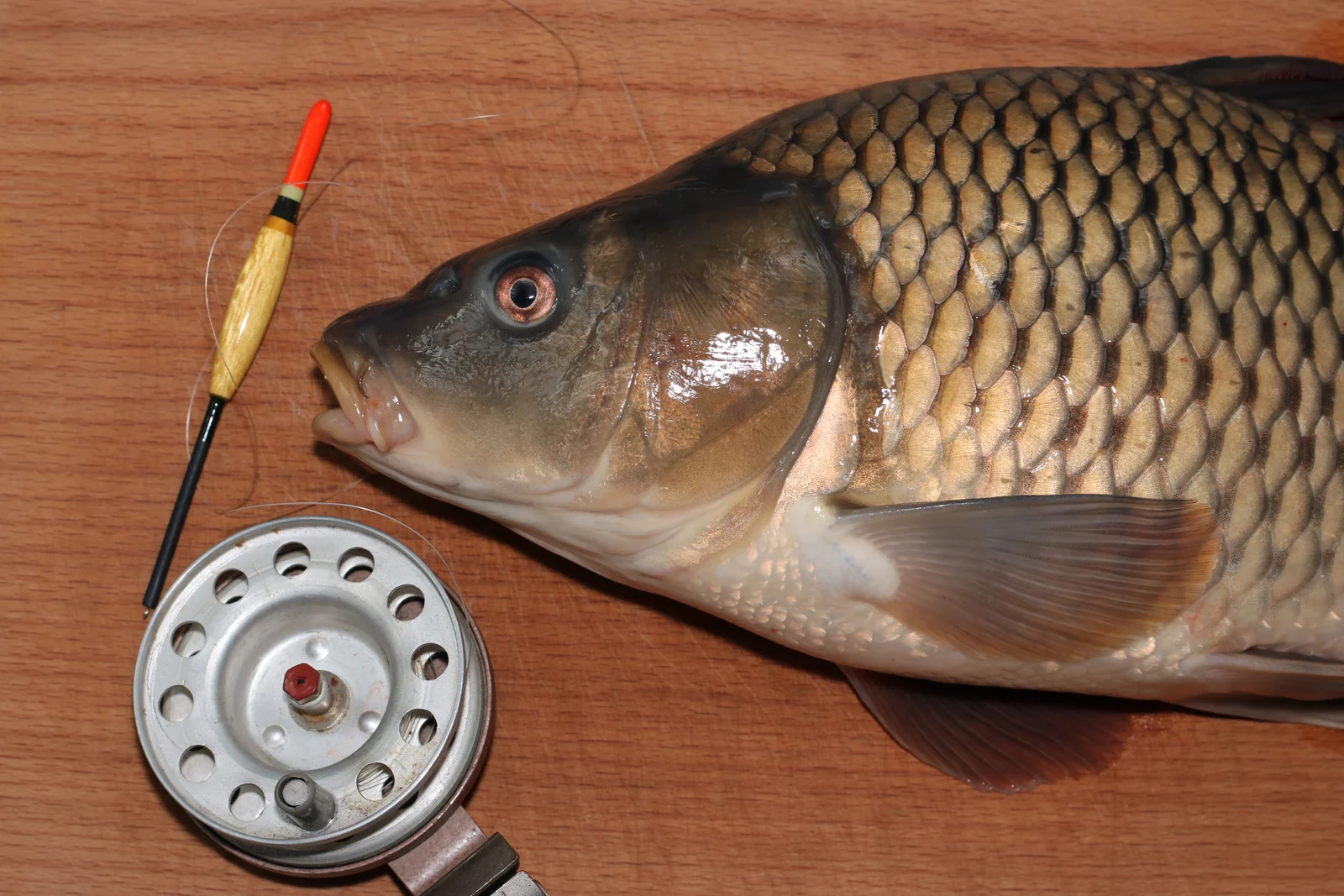
On the hook: sweetcorn, plain or prepared, pellets of various diameters, boilies flavoured with mussel, crayfish or fruit, and live bait, that is maggots and earthworms.
The part most people get wrong is the groundbait. At six to twelve metres of depth, ordinary groundbait breaks up on the way down and ends up scattered on the bottom. To get it down whole you need a groundbait binder or a bentonite based powder, especially on the stretches where the Prut current is felt. Maize cake gives the mix good mechanics, and sweet liquid additives or ones flavoured with fish and crustacean make it work.
For predators: zander, pike, catfish, asp
Here you work with spinning, from the bank. The rules require fishing from the bank, so leave the boat for a ride.
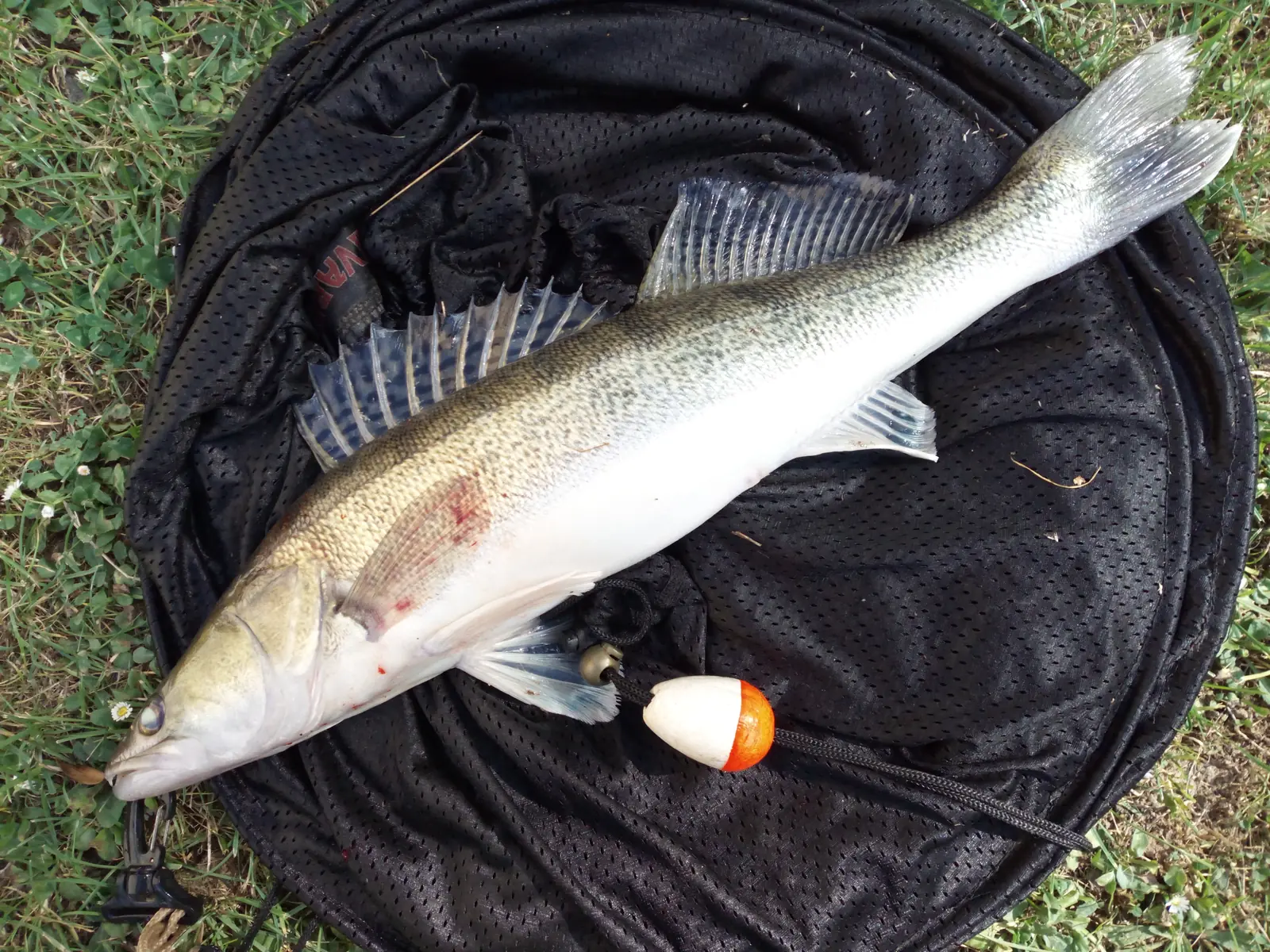
- Zander are looked for with soft plastics, shads and creatures, jigged aggressively on the rocky ledges. Natural colours, green and pearl, in good weather. Loud colours in dull weather.
- Pike sit in the areas with flooded vegetation. Large oscillating spoons and spinnerbaits work.
- Catfish are caught best at night, on a static rig, with a heavy lead on the bottom. The bait: a bunch of large black worms, leeches, small frogs or live bait fish, Prussian carp or roach.
- Asp are hunted by sight, where the small fish are breaking the surface.
Where you are never allowed, in any season
This has nothing to do with the spawning ban, and many people do not know it. Fishing is forbidden all year round near dams, at bridges and at the mouths of tributaries. There are two such places in our area: the Costesti-Stanca dam, about three kilometres away, and the mouth of the Ciuhur, where the river runs into the lake.
The Ciuhur bay stays good further up from the mouth. If you are not sure where the closed zone ends, ask us, because the locals know exactly where people fish.
When you are allowed to fish
This is what guests forget most often, so we will repeat it: there is a closed season in spring, and here the dates differ from the rest of the country.
- The Prut river and Lake Costesti-Stanca: fishing is forbidden from 9 April to 7 June, that is 60 days.
- The Ciuhur river and the other rivers in the Prut basin: the ban is longer, from 1 April to 30 June, that is 91 days.
The dates are set each year, so check the Environment Agency notice before you set off. If you come then, there is still plenty to do: it is the season when the reefs and the gorge look their best.
The rules in brief
- A permit is required, issued by the Environment Agency. It is personal, cannot be passed to anyone else, and is valid in the year you bought it. It can be bought for a year, for a day, or at the pensioner rate.
- Daytime only, from sunrise to sunset.
- A maximum of 5 kg of fish a day, or a single fish, if that one weighs more than 5 kg.
- At most two rods , with two hooks each. Sport fishing is done from the shore.
- At most 10 metres of bank all around your spot. You do not take up fifty metres of beach with rod rests.
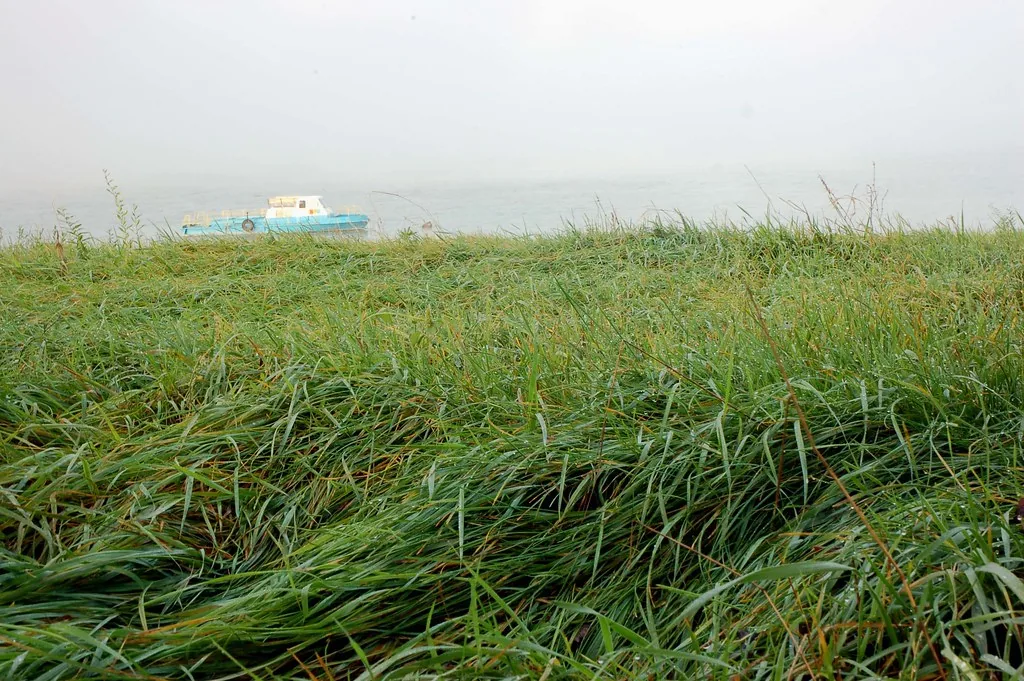
What to put in the car
Bring your gear from home, because we do not rent rods at the guesthouse. Otherwise the list is short:
- Two rods, that is all that is allowed anyway. A feeder for bream and Prussian carp, plus something stronger if you are going after carp or catfish.
- Rubber boots. The bank on the Ciuhur bay side is soft and thick with vegetation.
- An umbrella or a bank shelter. The wind blows across the lake and there is nowhere to take cover.
- Your permit with you, on paper or on your phone.
- A bag for rubbish. The shore stays beautiful only if everyone carries their leavings back.
Fish soup, made on the shore
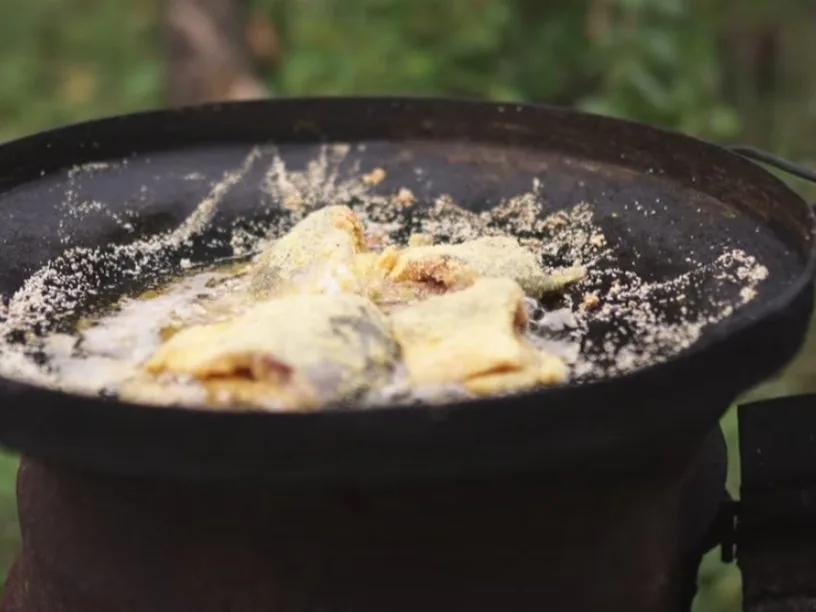
On the lake shore they make a fish soup you will not find in any cookbook: over a wood fire, to an old recipe, with grains, nettles and other herbs picked on the spot. Locals call it uha. It is not restaurant food, but what the fishermen here have cooked since the lake existed, while they wait for the water to settle.
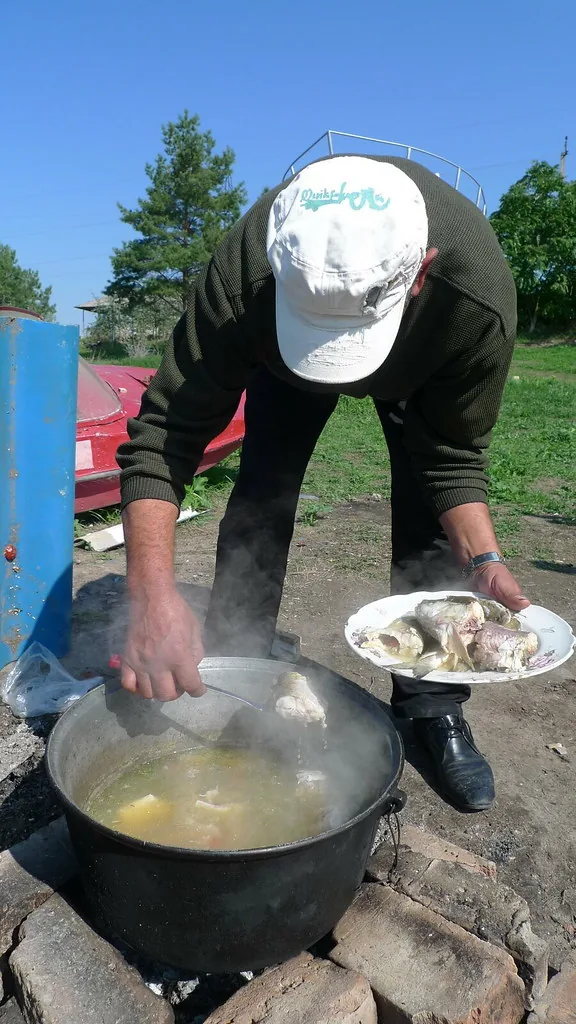
At Hanul Cu Noroc we have a cauldron and a barbecue. If you come with your catch, we cook it together. Tell us in advance and we will get the fire going. Here is the full recipe.
From the guesthouse to the shore
The lake is 100 metres from the guesthouse, so you get there on foot in a few minutes. If you want to go out on the water, we have kayaks, which cost 200 lei, and pedal boats. For the days when the water is rough or you are in the closed season, the Duruitoarea gorge is a 20 minute walk away, the village museum 15 minutes, and 3 kilometres on foot brings you to Stanca Dragostei.
Frequently asked questions
What fish can you catch in Lake Costesti-Stanca?
The lake holds 26 species and subspecies of fish, in six families. Nine have economic value and are the ones worth bringing a rod for: carp, bream, zander, catfish, asp, vimba, silver carp, bighead carp and grass carp. Bream dominates the catch at 44.6%, followed by Prussian carp at 15.4% and zander at 11.5%.
When is the closed season on Lake Costesti-Stanca?
On the Prut river and on the Costesti-Stanca reservoir, fishing is forbidden from 9 April to 7 June, that is 60 days. On the Ciuhur river and the other rivers in the Prut basin the ban is longer, from 1 April to 30 June. The dates are set each year, so check the Environment Agency notice before you set off.
Do I need a permit to fish?
Yes. The permit is issued by the Environment Agency. It is personal, cannot be passed to anyone else, and is valid in the year you bought it. It can be bought for a year, for a day, or at the pensioner rate. Fishing is allowed in daylight only, from sunrise to sunset.
How much fish can I keep per day?
A maximum of 5 kg a day, or a single fish, if that one weighs more than 5 kg. The rules allow at most two rods, with two hooks each, and sport fishing is done from the shore.
Where can I stay near Lake Costesti-Stanca?
The Hanul Cu Noroc guesthouse is in the village of Duruitoarea Veche, Riscani district, 100 metres from the lake shore. It has 9 rooms and 36 beds, a barbecue and a cauldron in the yard, and welcomes guests from May through October. Bookings on +373 798 48 077.
Sources
- Valentin Sofroni, Victor Capcelea, "Fish resources in the Costesti-Stanca reservoir", Noosferajournal, no. 12 / 2014. This gives the area and depth of the lake, the Ciuhur bay, the 26 species, the list of economically important species, the make-up of the catch and the trend in commercial fishing. ibn.idsi.md
- The Environment Agency, "Rules on sport, amateur and recreational fishing". This gives the permit, the permitted hours and the 5 kg limit. am.gov.md
- The Environmental Protection Inspectorate, "Fishing closed season 2026". This gives the ban periods. ipm.gov.md
- The regulation on fishing in the Prut river and in the Stanca-Costesti reservoir. This gives the number of rods and fishing from the shore. lege5.ro
- Ecoul Nordului, "2.5 tonnes of fish have reached the Costesti-Stanca reservoir", 17 April 2026. ecoul.md
- Bulat Dm., Bulat Den., Usatii M., Crepis O. et al., Institute of Zoology. This gives the 23 species found in the field in 2020, the biomass of 29 kg per hectare and the comparison with Dubasari. ibn.idsi.md
- The fishing techniques, the baits and the groundbait recipes are those used on the lake, as Nicolae Moscalu described them to us.

Come with your rod, we take care of the rest
The lake is 100 metres away, and Nicolae knows the good banks. Write to us and we will tell you how the water is looking in the week you are coming.
A guesthouse in Duruitoarea Veche, Riscani district. 9 rooms and 36 beds, 100 metres from Lake Costesti-Stanca. Open from May through October.
Phone and WhatsApp: +373 798 48 077