Nature · The Toltre of the Prut
Toltre: coral reefs in the middle of a field
The white rocks jutting out of the hills around the village are not ordinary rocks. They are the skeletons of corals, shells and algae, left in place after the sea that covered them withdrew.
In short
- The Toltre of the Prut are a chain of limestone reef formations almost 200 km long, along the middle Prut. In places they rise over 100 metres.
- They are made from the remains of lithothamnion algae, corals, foraminifera, bryozoans, molluscs and crabs, which lived between 10 and 20 million years ago, in the warm waters of the Badenian and Sarmatian seas.
- Around Duruitoarea Veche they show best in the gorge, a 20 minute walk away, at Stanca Dragostei, a 3 km walk away, and at the meanders of the Ciuhur, towards Varatic.
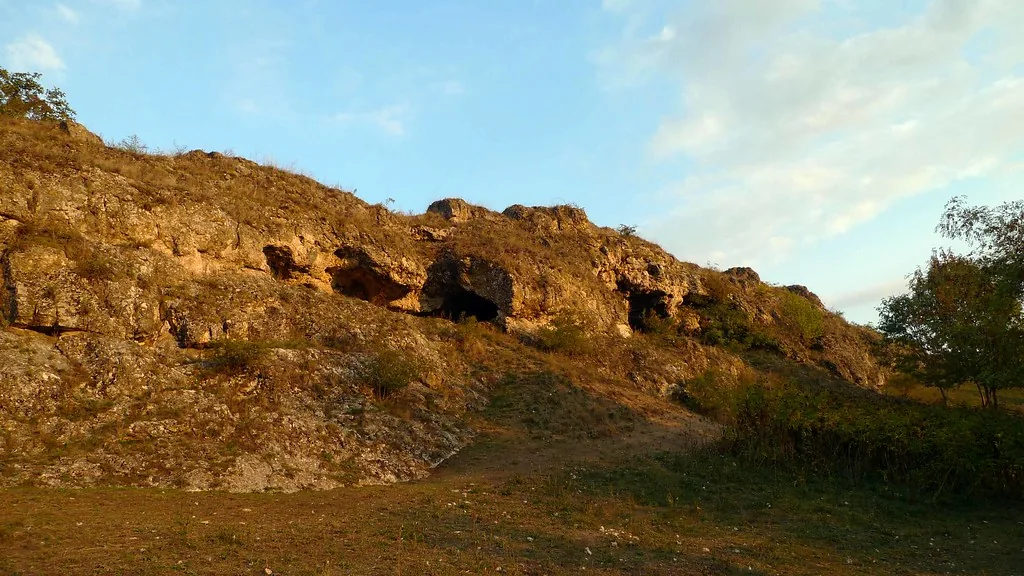
The first time you climb a hill at Duruitoarea Veche and come across a block of white stone rising out of the grass, you wonder what it is doing there, in the middle of a field.
There was once a warm sea
About 15 to 20 million years ago, the territory of today's Moldova was under water. That sea, which geologists call Badenian and later Sarmatian, was warm, shallow and full of life, like a tropical lagoon.
Reefs grew on its floor, and not only from corals: lithothamnion algae, foraminifera, bryozoans, molluscs, crabs. All of them settle, die and harden, layer upon layer, over millions of years of warm water, until limestone barriers form.
Then the sea withdrew, and the reefs stayed. Wind, rain and rivers wore away the softer ground around them, and what is left standing are the rocks you see today.
What "toltre" means
The Toltre of the Prut are a chain of limestone reef formations, almost 200 kilometres long, along the middle Prut. Although broken into pieces in many places, they still make up a single structure that in places rises over 100 metres. They gather above all in the basins of the small rivers that flow into the Prut: the Larga, the Vilia, the Lopatnic, the Draghistea, the Racovat, the Camenca and the Ciuhur, our river.
What you see up close
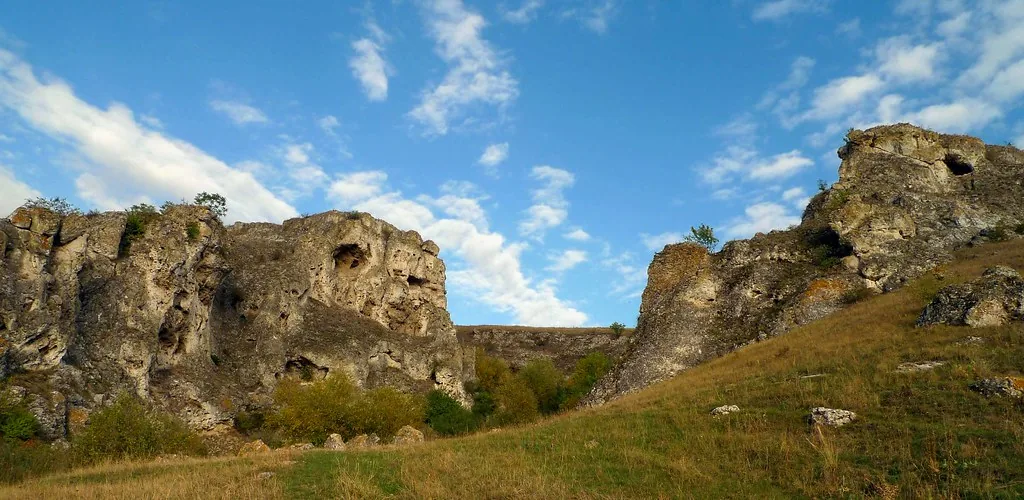
It is worth walking up to a rock and looking at it from thirty centimetres away. The limestone is not smooth. It is a heap of rounded forms, tubes, branchings and shells, that is to say the organisms themselves, turned to stone.
The wall of the gorge beside the village is limestone of Badenian-Volhynian age, that is lower Sarmatian. Through it, a small stream called the Duruita cut, over time, the gorge and the cave where the oldest traces of human habitation in Moldova were found. The reef, the gorge, the cave, the village and the village name all come from the same stone.
Where they show best
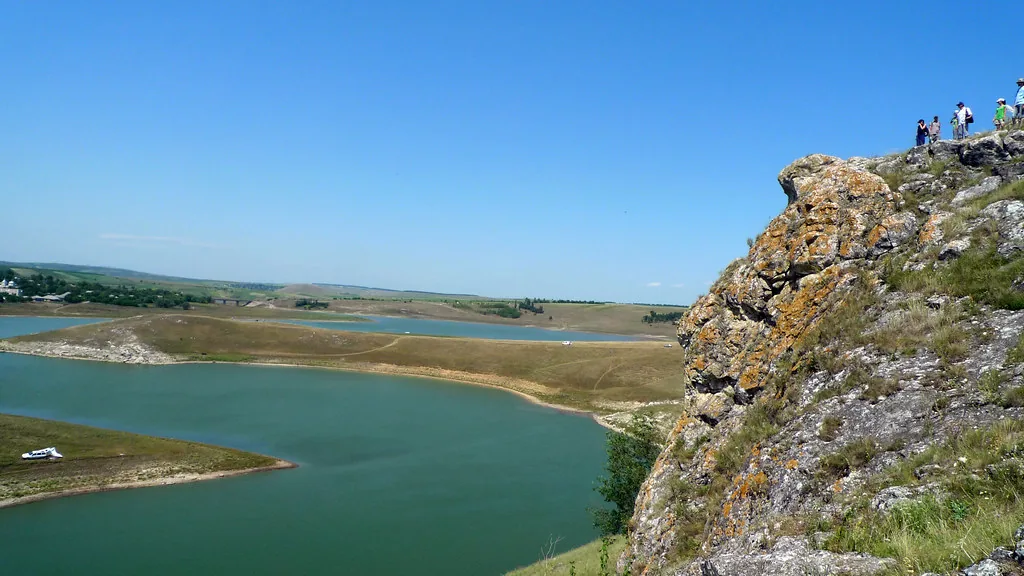
The meanders of the Ciuhur
A few kilometres from the village, towards Varatic, the Ciuhur twists between the reefs before flowing into the lake. The view from above, turquoise water between walls of white limestone, is the most photographed in the area.
The Lovers' Grotto
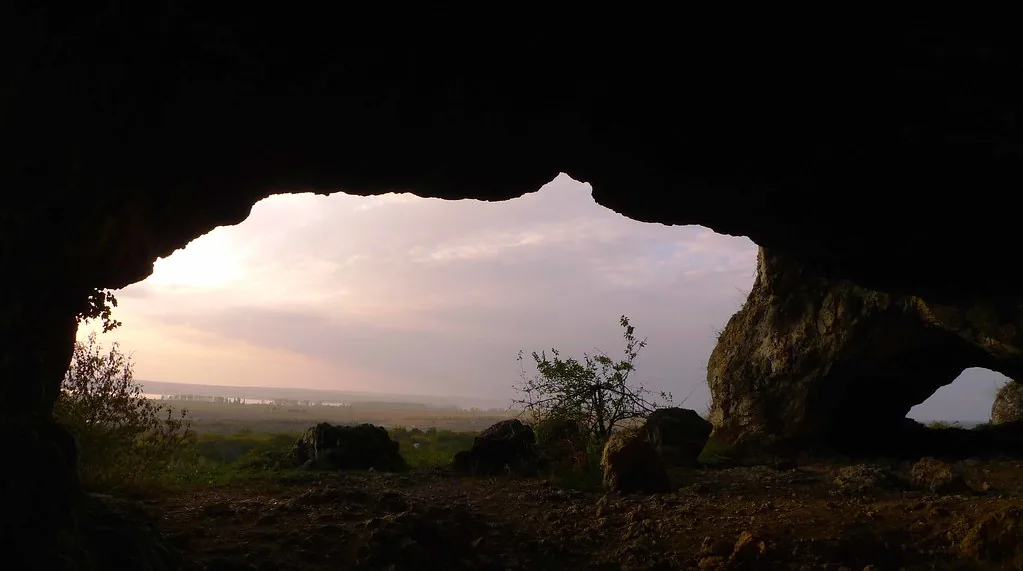
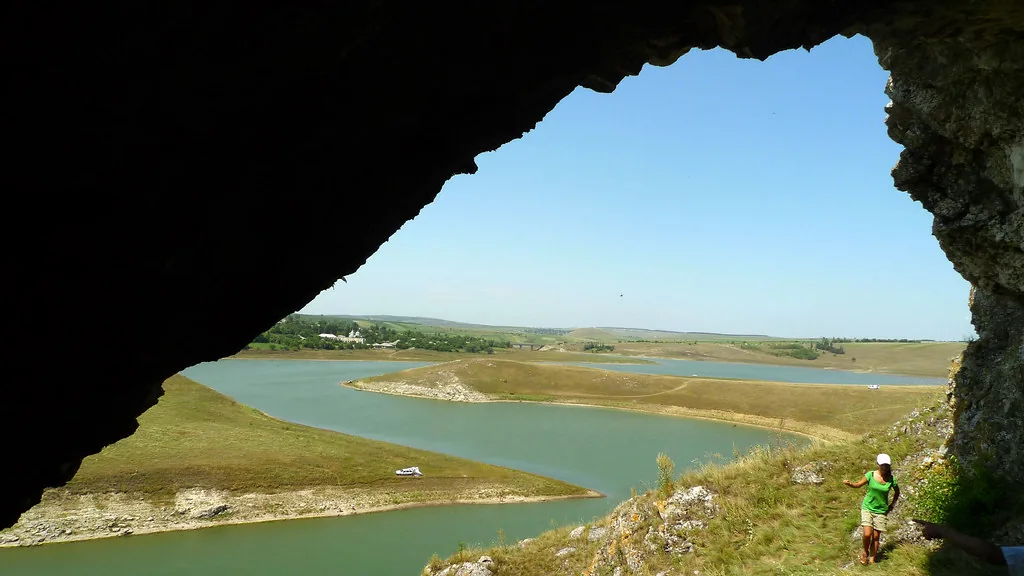
Also on the road to Varatic, a grotto opens in the rock wall from which the valley appears as if framed. Locals call it the Lovers' Grotto. The photograph below was taken from there.
Stanca Dragostei
A limestone reef with grottoes, standing above the water, a 3 kilometre walk from the village. The path runs among rocks and meadows, and from the top you can see the whole valley. It is the finest walk in the area and takes half a day.
The waterfall at Varatic
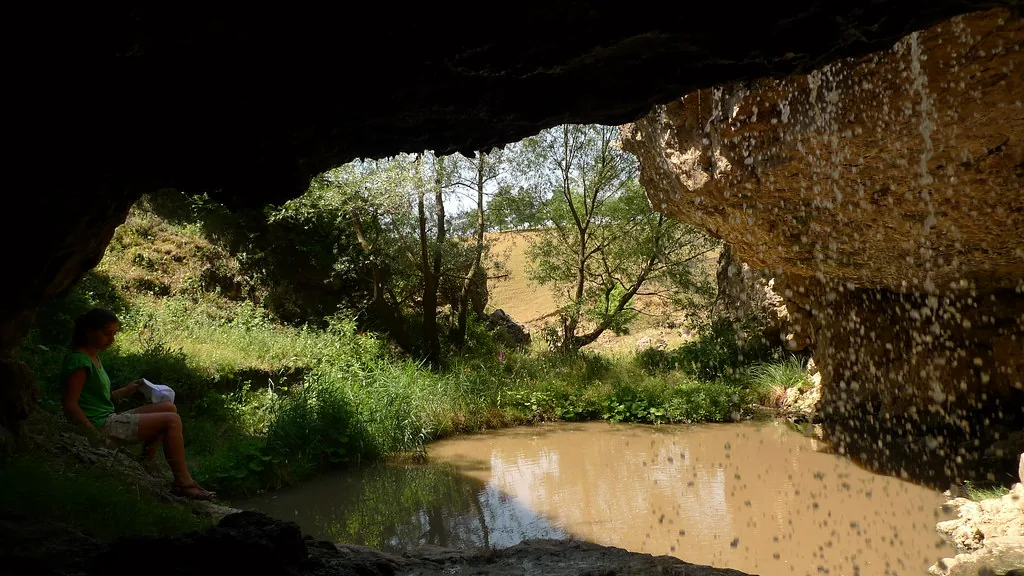
Not far from Duruitoarea Veche, water runs over a limestone ledge into a small amphitheatre of stone. In summer it is a thin thread, and in spring, after the snow melts, it really does look like a waterfall. It is exactly the kind of place the village took its name from: a "duruitoare", water that makes a noise as it falls over stone thresholds.
For those who want a bit of effort
The reefs at Duruitoarea Veche and at Cobani are known as good climbing spots, because the walls are short, vertical and well featured. Competitions have even been held at Stanca Cobani.
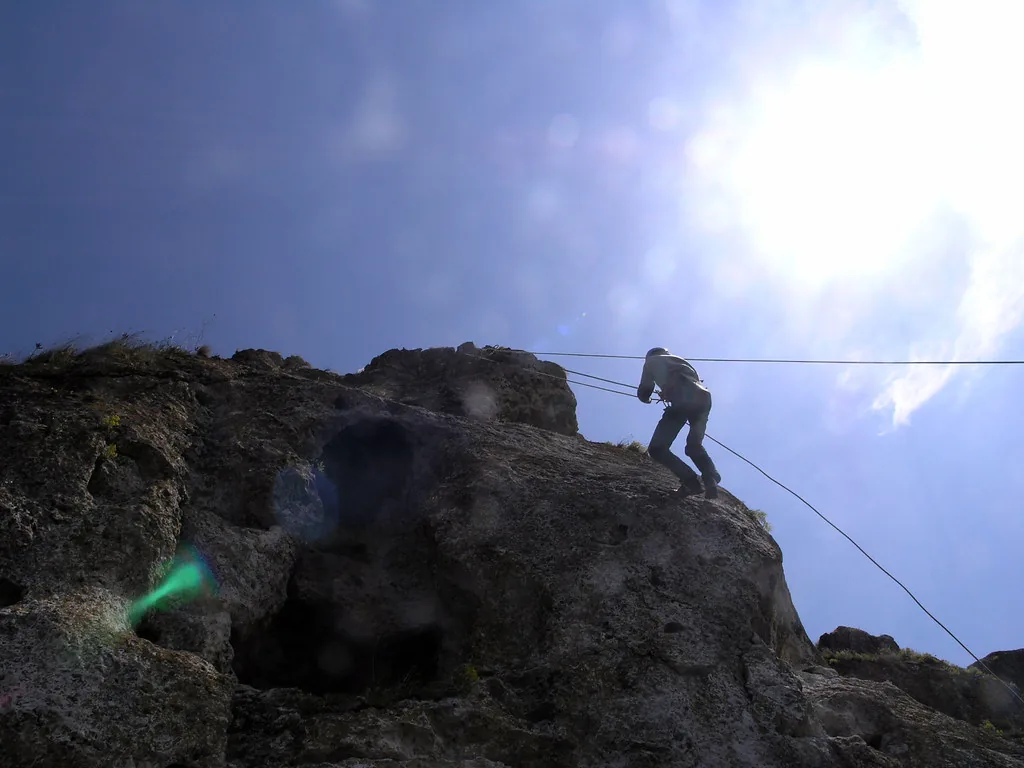
If you come with your own gear and some experience, there is somewhere to use it. If not, walking the ridge is just as fine and all you need is boots.
Walks starting from the village
- the Duruitoarea gorge and the cave: a 20 minute walk. The shortest route and the richest in story.
- Stanca Dragostei: a 3 km walk, among rocks and meadows.
- The meanders of the Ciuhur and the Lovers' Grotto: towards Varatic, half a day with stops.
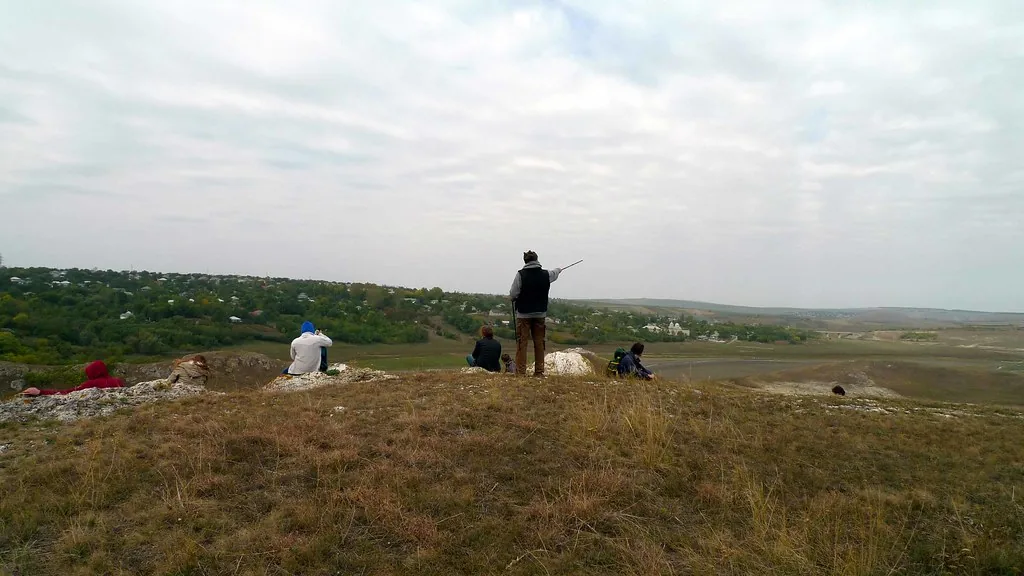
- The view towards Varatic: a panorama from the hills behind the village, good for a short stop.
One tip about light
Limestone is white and, at midday in strong sun, it looks flat, without relief. Go early in the morning or in the last two hours before sunset. Then the stone turns golden, the grottoes fall into shadow and the whole structure of the reef shows. Every good photograph from the area is taken at that hour.
Do not climb the toltre in the rain, wet stone is slippery. In winter, in dry weather, the wall freezes over and you will not find anyone there.
Frequently asked questions
What are the toltre?
The toltre are limestone reef formations, that is fossil reefs left on dry land after the sea withdrew. The Toltre of the Prut form a chain almost 200 kilometres long along the middle Prut and, although broken into pieces in many places, they still make up a single structure that in places rises over 100 metres.
How old are the Toltre of the Prut?
The organisms that formed them, that is lithothamnion algae, corals, foraminifera, bryozoans, molluscs and crabs, lived between 10 and 20 million years ago, in the warm waters of the Badenian and Sarmatian seas. The sea covered the territory of today's Moldova about 15 to 20 million years ago.
Where do the toltre show best near Duruitoarea Veche?
In the Duruitoarea gorge, a 20 minute walk from the village. At Love Rock, a reef with grottoes standing above the water, a 3 kilometre walk away. And at the meanders of the Ciuhur, towards Varatic, where turquoise water runs between walls of white limestone, including from the Lovers' Grotto.
Can you climb on the toltre?
Yes. The reefs at Duruitoarea Veche and at Cobani are known as good climbing spots, with short, vertical and well featured walls. Competitions have been held at Stanca Cobani. You need your own gear and some experience.
Where does the name Duruitoarea Veche come from?
From the word "duruitoare", formed from the verb "a durui", to make a rumbling noise. A duruitoare is a narrow spot in the bed of a small river where the water runs fast and makes a racket. It also means a threshold, or a waterfall. The Duruita stream, which cut the gorge through the limestone, still runs today.
Sources
- "Toltrele Prutului", Romanian Wikipedia. The length of the reef chain, the altitude, the river basins, the composition of the reefs and their age come from here. ro.wikipedia.org
- "Defileul Duruitoarea", Romanian Wikipedia. The Badenian-Volhynian limestone, the Duruita stream and the protected area status come from here. ro.wikipedia.org
- "Geneza formatiunilor recifale Camenca - Chisinau", Technical University of Moldova. The organisms that built the reefs and the conditions of the Badenian and Sarmatian seas come from here. repository.utm.md

See the toltre in a weekend
The gorge, the meanders of the Ciuhur and Love Rock fit into two days. Book a room, and Nicolae will tell you which way to go.
A guesthouse in Duruitoarea Veche, Riscani district. 9 rooms and 36 beds, 100 metres from Lake Costesti-Stanca. Open from May through October.
Phone and WhatsApp: +373 798 48 077