History · The Duruitoarea gorge
What was found in the Duruitoarea cave
A twenty minute walk from the village is the place where people slept a few hundred thousand years ago. Archaeologists took twenty thousand bones out of it, a human jaw that was lost in Moscow, and the remains of a bear that ended up, millennia later, on the village coat of arms.
In short
- The Duruitoarea Veche cave holds the oldest known traces of human habitation in the Republic of Moldova. Layers IV and III are between 180,000 and 300,000 years old.
- It was reported in 1958 by the archaeologist Nicolae Chetraru and dug intermittently until 1973.
- About 20,000 bones were taken from it, from 54 mammal species and 29 bird species, along with tools of flint, antler and bone, a fragment of a human lower jaw that vanished without trace, and cave bear bones, the animal that reached the village coat of arms in 2016.
Where the village name comes from
The toponymist Anatol Eremia shows that Duruitoarea comes from the word "duruitoare", formed from the verb a durui, to make a rumbling noise. In Romanian, a duruitoare is a narrow spot in the bed of a small river, where the water runs fast and makes a racket. It also means a threshold, or a waterfall.
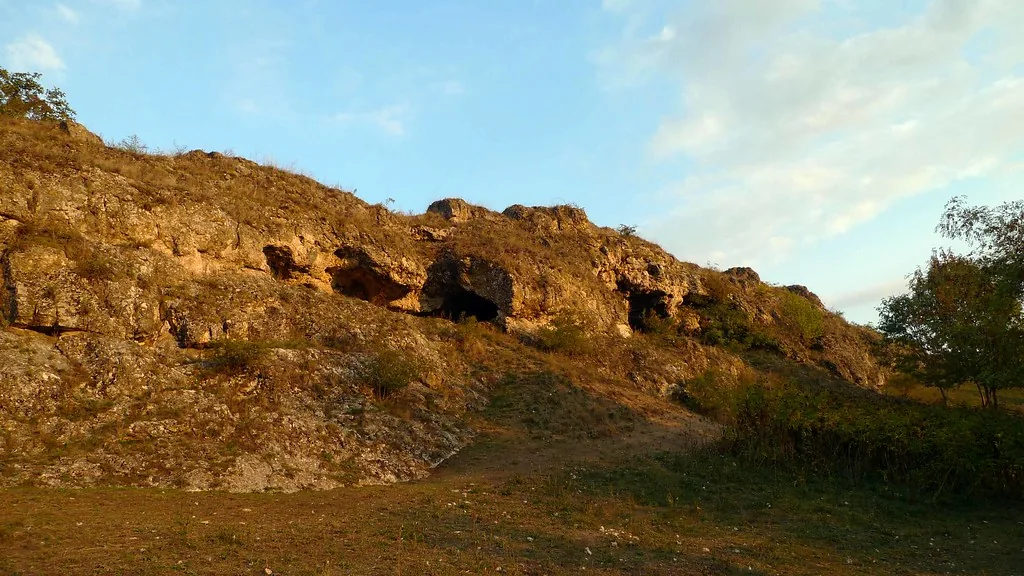
The stream that gave the name still runs today. It is called the Duruita, a small tributary of the Ciuhur, and over millions of years it cut the gorge at the edge of the village through the limestone. Halfway up the stone wall a dark opening appears: the cave.
Who found it
The Palaeolithic site was reported in 1958 by the archaeologist Nicolae Chetraru. It was not a discovery of a single day. Teams of archaeologists, geologists and palaeontologists dug here intermittently, from 1958 until 1973, and what they found changed what was known about the prehistory of the area.
What the cave looks like
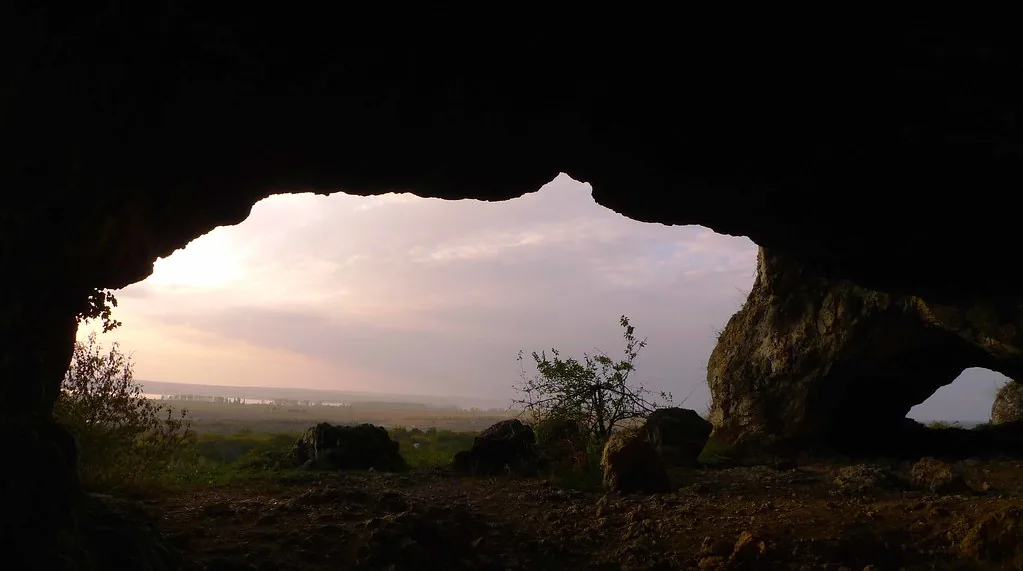
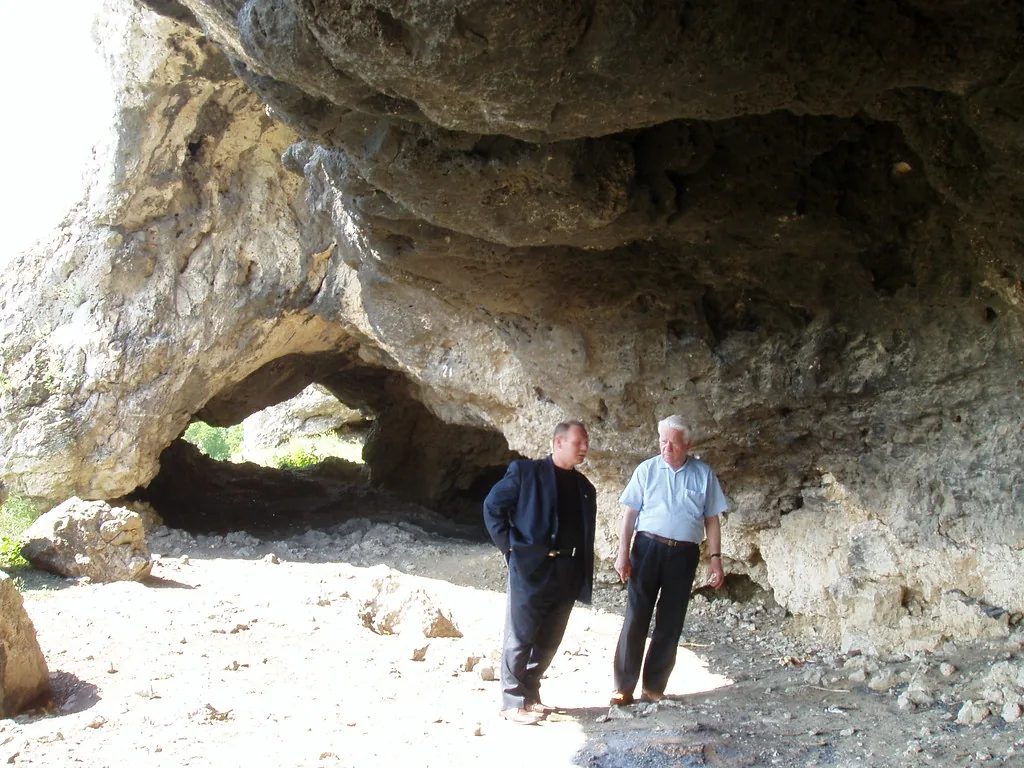
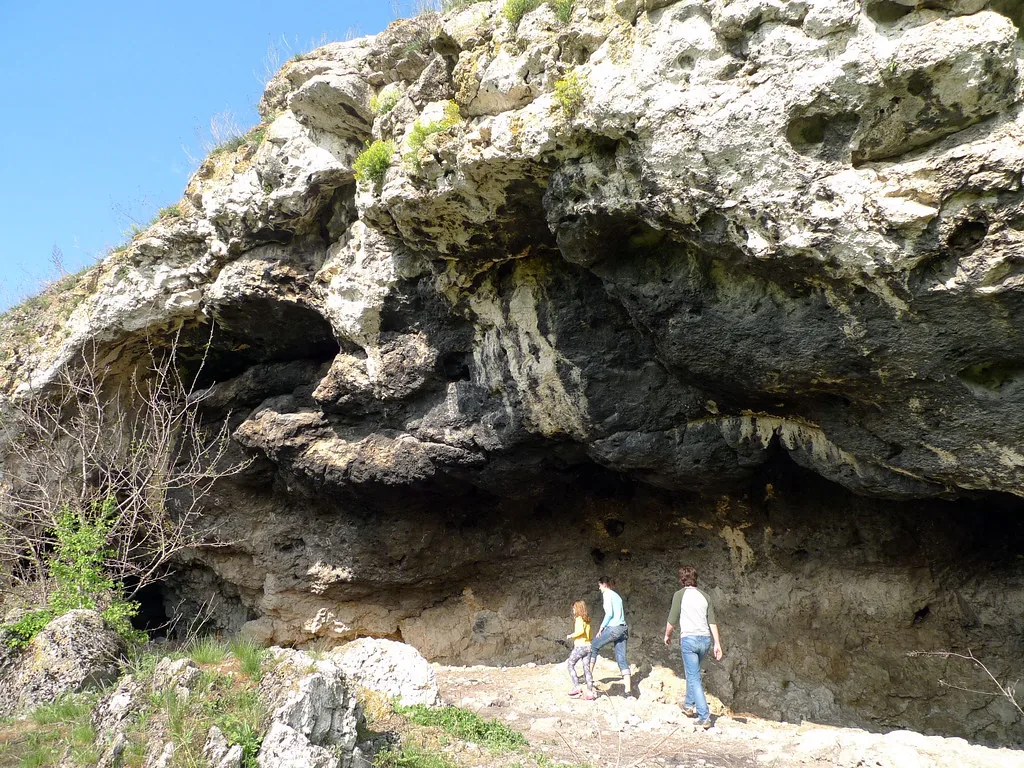
It has three chambers, a total length of 49 metres running north to south, a width of between 5 and 9 metres, and in places the roof rises to 8 metres. It is not a deep cave with galleries and stalactites. It is more like a rock shelter, wide and bright at the mouth, which is exactly what a group of hunters would choose for the winter.
The stone it is cut into has a story of its own. It is limestone of Badenian-Volhynian age, that is lower Sarmatian, the same fossil reef that forms all the cliffs around the village. We wrote about it separately, in The Toltre of the Prut.
Three levels of habitation
Five cultural layers were identified in the deposits inside the cave, of which three are certain levels of Paleolithic habitation, marked by archaeologists as IV, III and II.
- Layers IV and III are between 180,000 and 300,000 years old. They are the oldest in the whole region.
- Layer II is far more recent and belongs to the Upper Palaeolithic. No radiocarbon dating has been done on it yet, so no exact figure can be given.
To put that in perspective: the first people who slept in the Duruitoarea cave did so more than a hundred thousand years before Homo sapiens reached Europe.
These figures are larger than the ones circulating online. For a long time the number written down was 160,000 years, following Chetraru’s first attribution. The monograph published in 2017, which he worked on himself, pushes the lower layers much deeper in time, resting on two things: the teeth of an archaic mammoth found there, and pollen from plants that disappeared from the region before the last interglacial.
Twenty thousand bones
From all the layers of the cave about 20,000 bone remainswere gathered, nearly 10,000 of them from layer II alone. In them 54 mammal species and 29 bird specieswere identified, a diversity hard to imagine today on the fields around.
The list says everything about the climate of the time: wild horses, bison, reindeer, deer, mammoths, woolly rhinoceroses, roe deer and beavers, but also cave bear, cave lion, hyena and steppe marmot. The horse is by far the commonest, with nearly five thousand bones in layer II alone.
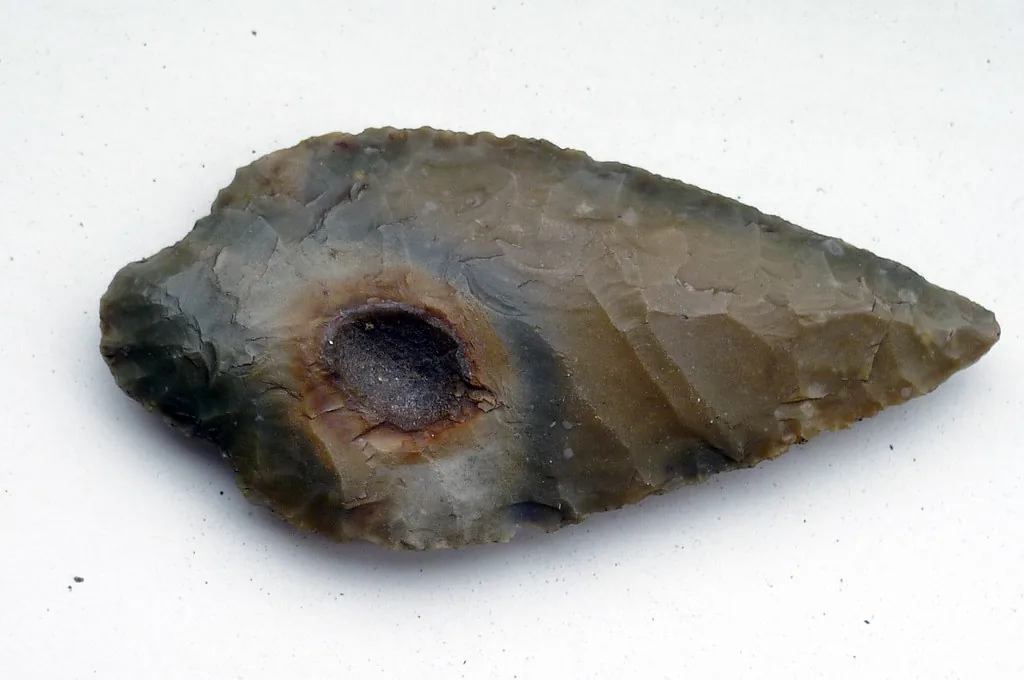
Alongside the bones were found working and hunting tools of flint, antler and bone, eight pendants made from deer teeth, bone and mammoth ivory, and a sewing needle with an eye, seventeen centimetres long.
It is worth saying what these figures do not mean. Most of the bird and rodent bones are not leftovers from the hunters’ meals, but what owls and carnivores left behind when they used the cave between two human occupations.
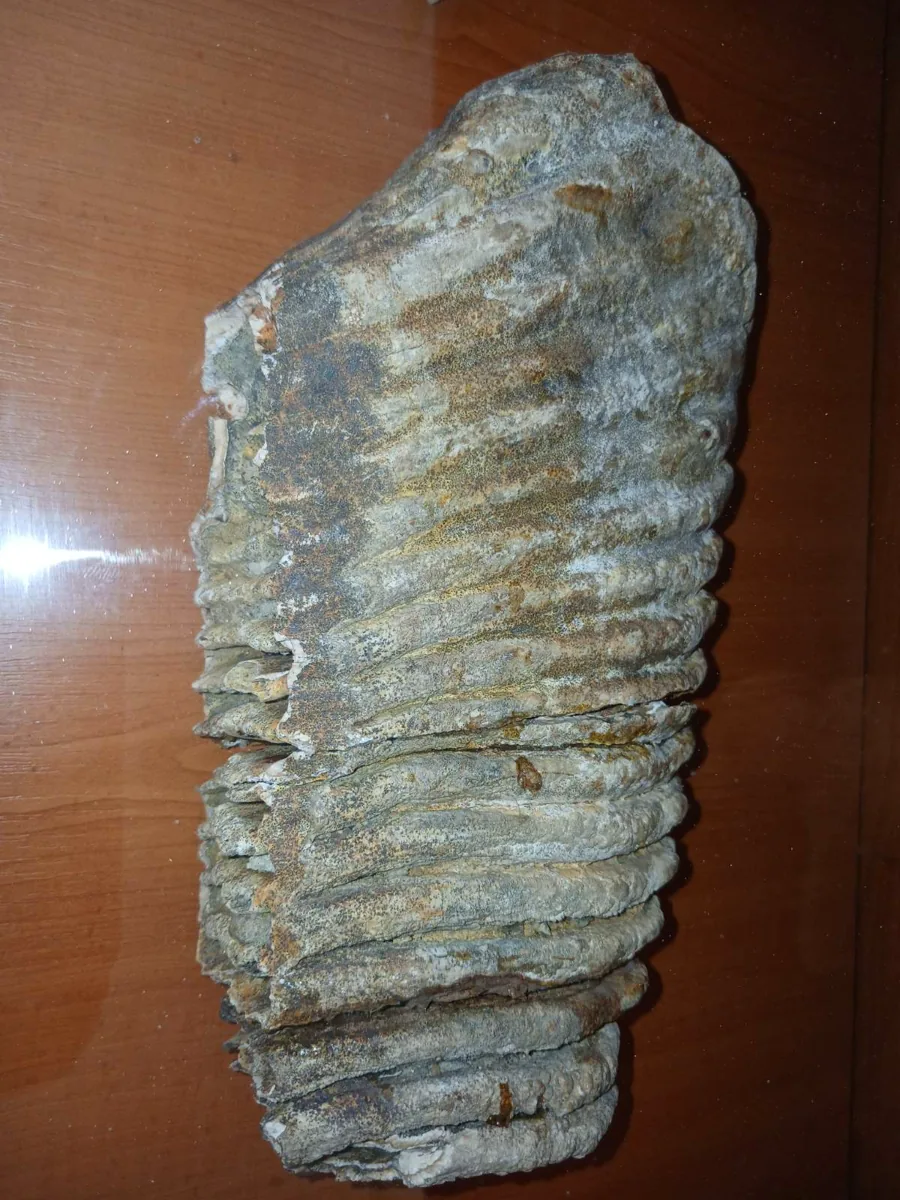
Not far from the cave, in the gorge, some thirty metres from the rock face, the bones of a mammoth were dug up, among them a tusk 2.75 metreslong. The palaeontologist Theodor Obada attributed them to the Khazar mammoth, an archaic form, older than the woolly mammoth. Among the bones there was also a flint knife, so the animal was butchered by people.
The tooth
The most important discovery is neither the largest nor the most visible. It is a fragment of a human lower jaw with six teeth, well preserved, taken from layer II.
That is all that remains of someone who lived, hunted and died in this valley. From that jaw, anthropologists could tell who he was, what he ate and what he looked like.
In 1960the piece was sent to Moscow, to Professor Yakov Roginsky, head of the anthropology department at the university there, for laboratory analysis. No word about it has come since and nobody knows where it is. All that remains is a black and white photograph, published in the monograph on the site. Those who wrote it, Chetraru among them, say its fate „remains a mystery”.
The bear on the coat of arms
From here the story moves straight to 2016.
In the oldest of the cave’s cultural layers, the fifth, at 230 to 235 cm below today’s surface, archaeologists found the bones of a cave bear (Ursus spelaeus). When the National Heraldry Commission approved the coat of arms of Duruitoarea Veche, this find ended up right in the middle of the shield.
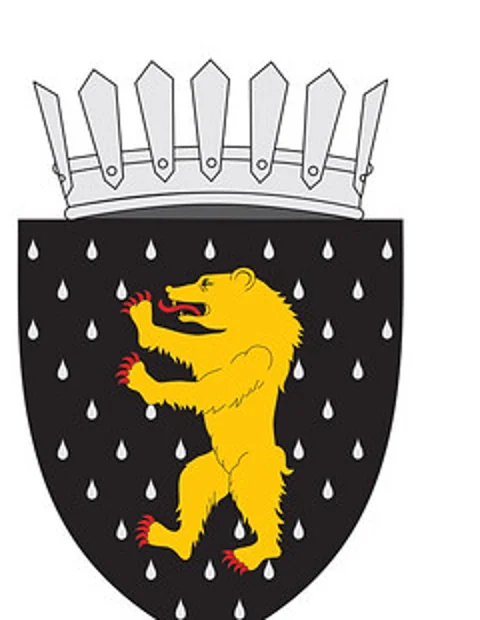
Every element means something:
- The black field is the darkness of the cave. In heraldry, black also stands for humility, prudence and learning, which fits historically too, because in the 18th and 19th centuries Duruitoarea appears as being held by monasteries.
- The cave bear is rendered in gold, the most valued heraldic tincture, and stands rampant, with red tongue and claws. This shows the aggression of the animal, once king of the European forests and man's chief natural rival.
- The silver droplets that seem to fall from the upper edge of the shield are canting arms. Without words, they say the name of the village: the water that rumbles.
This may have been the original name of a valley, of a steep ravine, later carried over to the estate or to the place where the village stood, and in the end to the village itself. Anatol Eremia, toponymist, on the origin of the name Duruitoarea
How to get there and what you see today
The Duruitoarea gorge is a natural monument of national importance. It was protected by decrees in 1962 and 1975, then confirmed by Law no. 1538 of 25 February 1998 on the state protected natural areas fund. The area is officially listed at 40 hectares, although more recent measurements give 6.63 hectares. It is administered by the Costesti town hall.
Before you set off
- Distance: a 20 minute walk from the guesthouse.
- Footwear: boots or trainers with a good sole, because the climb to the cave goes over grass and stone. Do not go up to the gorge in the rain, wet limestone is slippery.
- With a guide: the tour of the museum, the cave and the gorge costs 500 lei for a group of up to 10 people and 800 lei for 11 or more.
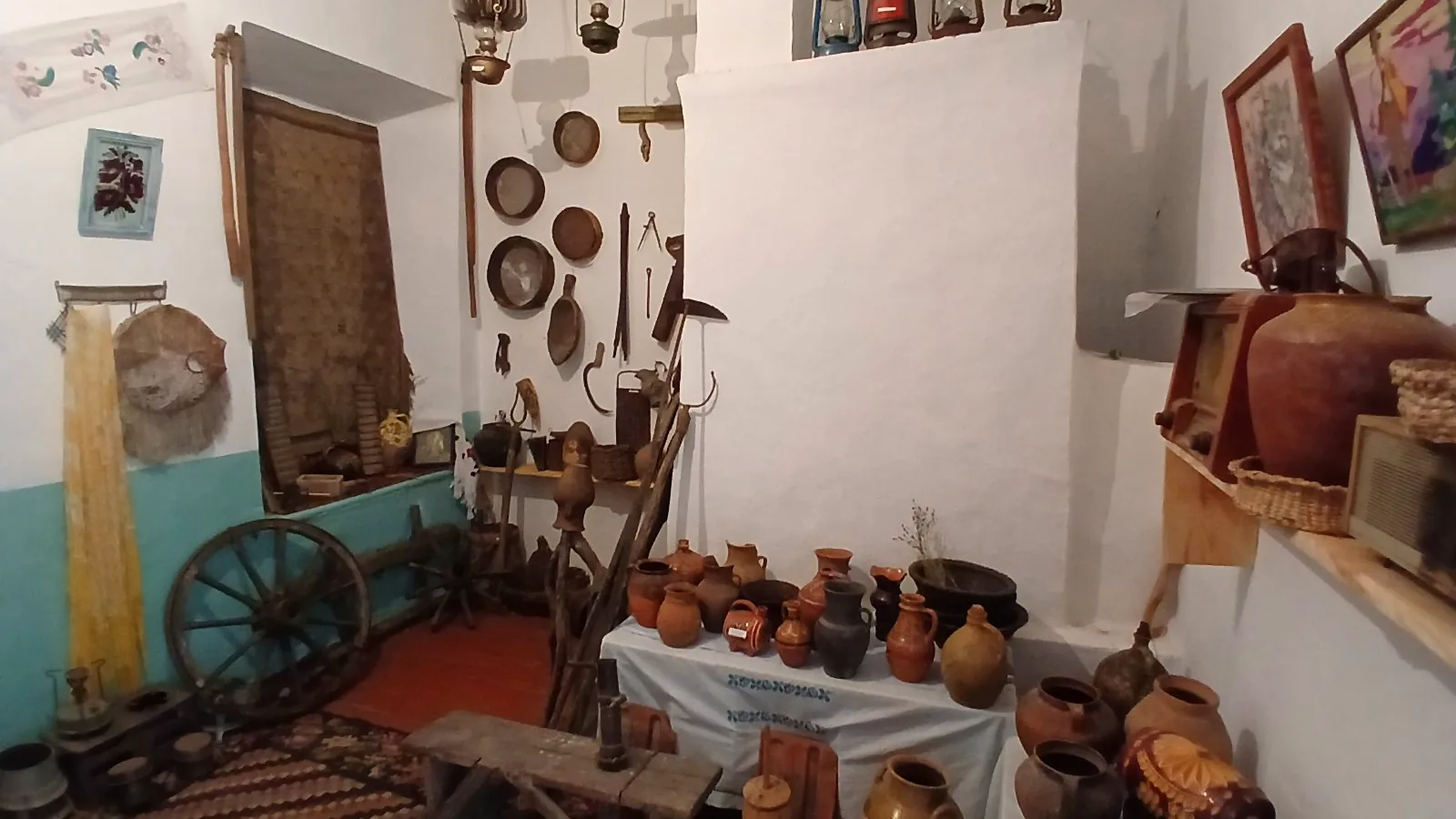
- The museum: the village has its own museum, with fossils from the cave, prehistoric pottery and objects donated by people. It is worth seeing before the cave, because afterwards you look at the stones differently.
- It is a protected area. No digging, no hammering for fossils, and nothing left behind.
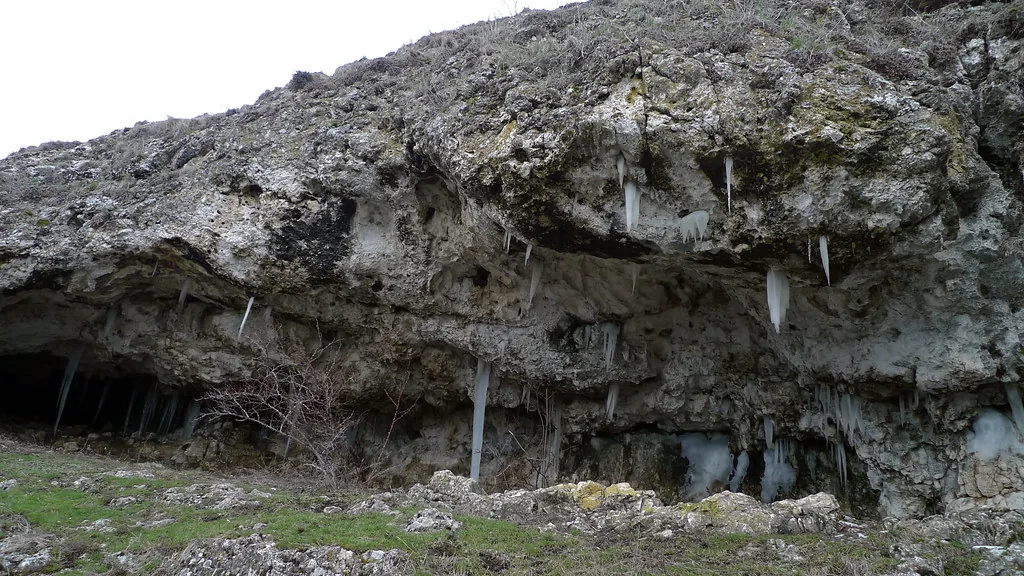
The best time is early in the morning or towards evening, when the sun reaches in under the stone eaves. In winter, in dry weather, the gorge is empty and silent, and the wall coats itself in ice.
Frequently asked questions
How old is the Duruitoarea Veche cave?
Habitation layers IV and III are between 180,000 and 300,000 years old, according to the monograph published in 2017 by Anisyutkin, Chetraru and Kovalenko. Layer II is far more recent and belongs to the Upper Palaeolithic, but has no radiocarbon dating yet. These are the oldest known traces of human habitation on the territory of the Republic of Moldova.
Who discovered the Duruitoarea Veche cave?
The Palaeolithic site was reported in 1958 by the archaeologist Nicolae Chetraru. Excavations continued intermittently until 1973, with teams of archaeologists, geologists and palaeontologists.
What was found in the cave?
About 20,000 bone remains, nearly 10,000 of them from layer II alone, from 54 mammal species and 29 bird species: wild horses, bison, reindeer, deer, mammoths, woolly rhinoceroses, roe deer, beavers, cave bear. Alongside them, tools of flint, antler and bone, eight pendants and a sewing needle with an eye 17 cm long, and a fragment of a human lower jaw with six teeth, sent to Moscow in 1960 and lost since. In the gorge the bones of a Khazar mammoth were also dug up, with a tusk 2.75 metres long.
How big is the cave?
It has three chambers, a total length of 49 metres running north to south, a width of between 5 and 9 metres, and in places the roof rises to 8 metres. It is a rock shelter, not a deep cave with galleries.
Why does Duruitoarea Veche have a bear on its coat of arms?
Because in the oldest cultural layer of the cave, at 230 to 235 cm below today's surface, the bones of a cave bear (Ursus spelaeus) were found. The coat of arms approved by the National Heraldry Commission in 2016 shows a golden cave bear rampant, with red tongue and claws, on a black field, the colour of the darkness inside the cave. The silver droplets say, heraldically, the name of the village: the water that rumbles.
Can you visit the Duruitoarea Veche cave?
Yes. The gorge is a 20 minute walk from the village of Duruitoarea Veche and is a protected natural area. The guided tour of the museum, the cave and the gorge costs 500 lei for a group of up to 10 people and 800 lei for 11 or more. You need shoes with a good sole, and in the rain do not go up, wet stone is slippery. Inside the protected area you may not dig and you may not collect fossils.
Sources
- "Defileul Duruitoarea", Romanian Wikipedia. This gives the geology of the gorge, the dating of the layers, the protected status and the area. ro.wikipedia.org
- "Grota Duruitoarea Veche", Stancile Prutului. This gives the dimensions of the cave, the hunted species, the 2004 discovery and the physical type of the human remains. stancileprutului.md
- Silviu Andries-Tabac, doctor of history, vice-president of the National Heraldry Commission. The official explanation of the coat of arms of Duruitoarea Veche, Chisinau, 2016, with the cultural layers, the Ursus spelaeus bones at 230 to 235 cm, and the etymology of the name after Anatol Eremia.
- The National Archaeological Agency, "On the caves with Paleolithic traces of habitation on the territory of the Republic of Moldova". ana.md

A room twenty minutes from the cave
Nicolae takes you to the museum, the cave and the gorge and tells you what was found in each corner. Message us and we will set the day.
A guesthouse in Duruitoarea Veche, Riscani district. 9 rooms and 36 beds, 100 metres from Lake Costesti-Stanca. Open from May through October.
Phone and WhatsApp: +373 798 48 077